2026-11-12 · Derek Harlan
How To Spot AC Condensation Leaks Before They Damage Scottsdale Ceilings
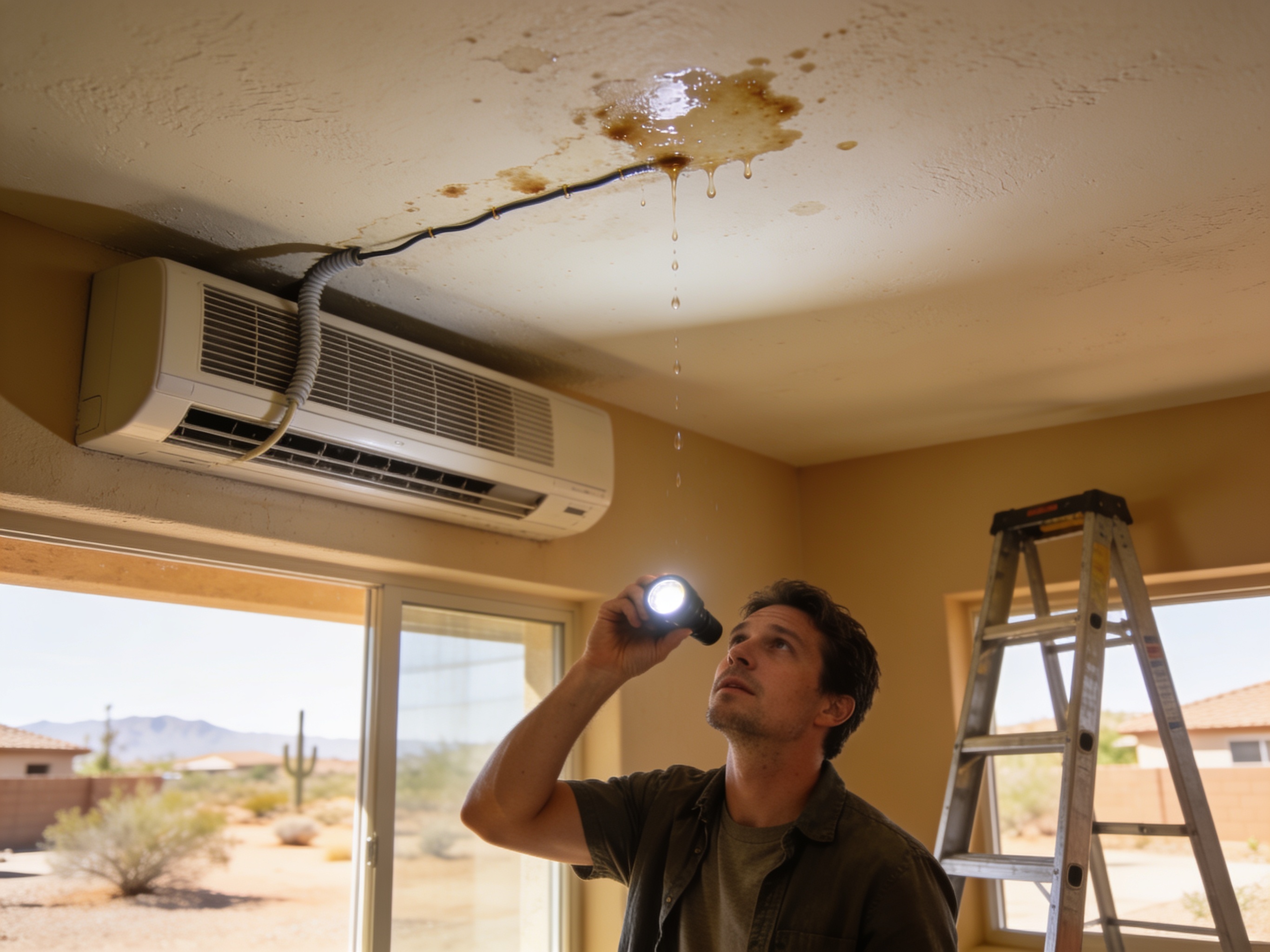
AC condensation leaks typically appear as yellow-brown stains or soft spots on ceilings within 2–4 weeks of a drip starting in Scottsdale homes. The hot desert climate with summer highs over 110°F forces units to run constantly, producing excess moisture that pools when drain lines clog or coils freeze. Homes built in the 1970s–1990s across Maricopa County often have attic ducts with poor insulation that sweat heavily during mild winters when temperatures still reach the 70s.
Understanding Condensation Risks in Scottsdale's Climate
Scottsdale's hot desert conditions make AC systems work harder than in nearby Phoenix or Tempe, where humidity spikes during monsoon season add to the load. Constant operation cools coils below the dew point, creating gallons of condensate daily that must drain properly. When lines clog with desert dust or algae, water backs up and leaks through attic insulation onto drywall ceilings. Older homes near Camelback Mountain or Scottsdale Civic Center often have single-pane windows and less attic ventilation, trapping more moisture and accelerating ceiling damage. Checking the primary drain pan monthly during peak summer months catches issues before they reach living spaces.
Visual Clues on Ceilings in Local Neighborhoods
Look for faint rings or bubbling paint on ceilings in rooms directly below attic AC handlers, common in McCormick Ranch and Gainey Ranch tract homes. In Old Town Scottsdale bungalows, check corners near supply vents where cooler air meets warmer drywall. Soft, sagging areas the size of a quarter often signal active leaks from frozen coils during 100°F+ days. Troon North and Desert Mountain properties with vaulted ceilings hide drips longer, so inspect from the attic with a flashlight for wet insulation or rusted metal pans. These signs appear faster in homes within 5 miles of Scottsdale Fashion Square due to higher dust levels affecting coils.
Step-by-Step Inspection Around Your AC Unit
Turn the system off at the thermostat and wait 30 minutes, then remove the access panel to examine the evaporator coil for ice buildup. Feel the condensate line running outside the home near the unit pad for blockages by gently blowing through it with a wet/dry vac. Check the secondary overflow pan for standing water, a common failure point in 15–20 year old units serving Paradise Valley and Scottsdale homes. Measure the temperature differential between return and supply air; a drop under 15°F often indicates restricted airflow causing excess condensation. Repeat these checks every 30 days from May through September when usage peaks.
Next Steps When Leaks Appear
Shut off the AC immediately and place towels or a bucket under any visible ceiling drip to limit spread. Document the stain size and location with photos before moisture spreads into walls. Contact a water damage restoration professional through Water Damage Restoration if drywall softens or mold spots form within 48 hours. Review What Affects Water Damage Restoration Costs In Scottsdale After A Pipe Burst to understand similar repair factors like drywall replacement and drying times. Homeowners near Indian Bend Wash should also read Monsoon Flooding Risks For Scottsdale Homes Near Indian Bend Wash because seasonal rains compound AC-related moisture issues in low-lying areas.